
Jefferson, GA · Garage Door Service
What a Cold Snap Does to a Garage Door Spring in Jefferson
Jefferson homes built mostly from 1986 to 2012 see springs fail fast in cold snaps. Here's what to watch, what to fix yourself, and when to call a pro.
- Repairs & new doors
- Springs & openers
- Serving 6 nearby communities
What Is Going On
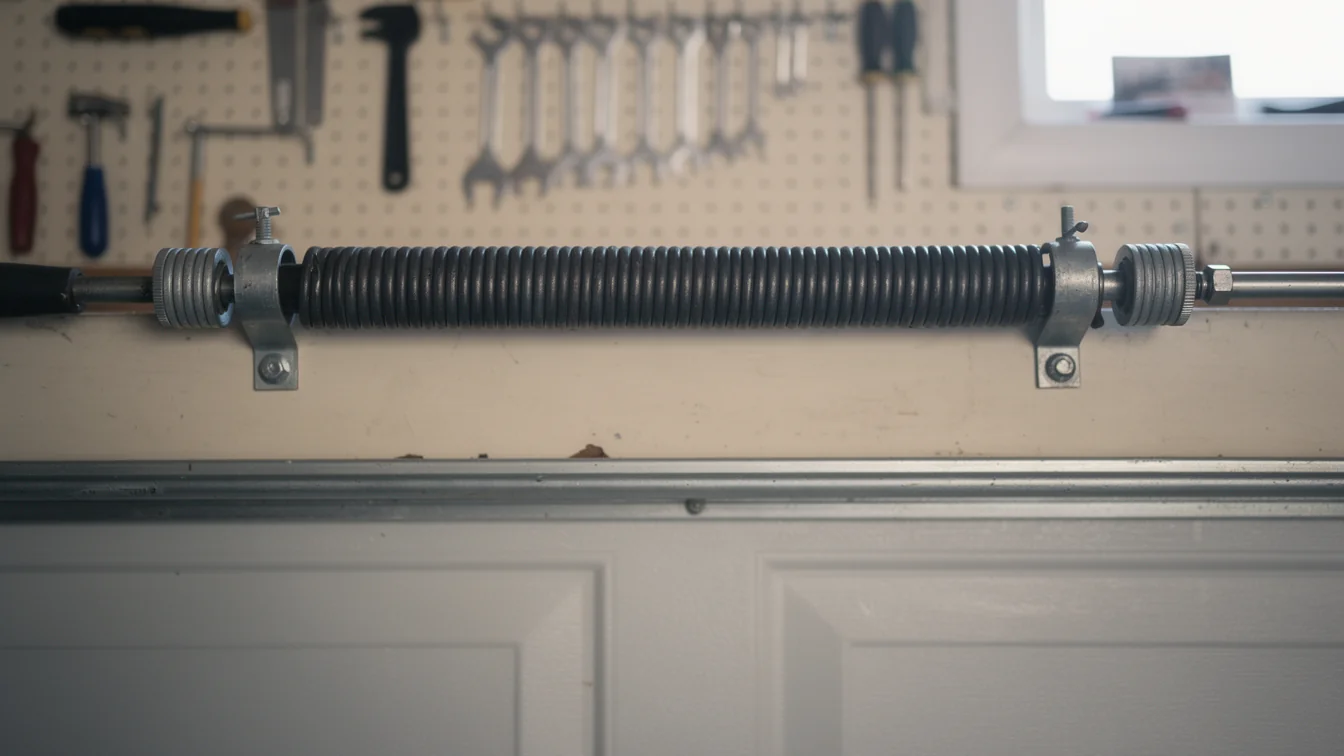
Most houses in and around Jefferson went up between 1986 and 2012, with the median build year sitting around 1996. That puts a lot of torsion spring setups from the late 80s through the 2000s on these garages - steel wound tight and rated for roughly 10,000 open-close cycles, now somewhere between 20 and 35 years into that job. Across the fifteen communities this stretch of service covers, from Pendergrass five miles out to Lula eighteen miles north, the housing is mostly 1980s and 90s construction, so the failure pattern repeats itself house after house: a spring holds fine for two decades, then loses tension all at once, usually during a cold stretch rather than a warm one.
What you'll notice first is usually the door feeling heavier than it used to, or the opener straining on the way up. Sometimes there's a loud bang from the garage - that's the spring itself letting go, not the door falling. If the door won't budge, or one side hangs lower than the other, that's a spring problem, not an opener problem, and it's not something to force past.
When It Stops Being a DIY Job
A torsion spring under tension holds enough stored force to break bones or worse if the winding bar slips, and the original equipment on homes from this build era often uses side-mounted hardware that doesn't match what's sold off the shelf now. That mismatch is the real reason this isn't a weekend project: even if you get the spring itself right, finding a drum or shaft that fits 1990s hardware without swapping the whole assembly takes the right parts on the truck, not a guess at the hardware store.
If the job is a broken torsion spring on a double door, that's a call-a-pro job, full stop. Track alignment, a slipping cable, or a sensor that needs cleaning - those are things an owner can often handle. Spring tension is not. The honest limit here: if the opener, track, and springs are all original to a house built in the 90s, replacing just the spring sometimes means the rest of the hardware fails within a year or two anyway, and at that point a full hardware swap is the better money.
Leaving It Alone
With 9,901 owner-occupied houses sitting across roughly 19,064 households in this area, a good share of those garages are carrying a spring older than the family's time in the house. Leaving a weak spring alone doesn't make it fail gently - it makes the opener do the spring's job, burning out the motor or stripping the gear inside trying to lift weight the spring should be carrying. That's a $40 part turning into a $200 one.
On a median household income of $70,000 here, a spring replacement is usually a decision a family makes without much drama. A full opener-and-track rebuild after months of ignoring a tired spring is a bigger one. The gap between those two bills is the whole argument for not waiting once a door starts feeling heavy or the opener starts groaning on the way up.
What the Weather Here Does to It
This area sits in a cold-moderate climate band, not the deep-freeze zone further north, which matters for how these springs actually fail. Steel contracts in the cold and loses a little flexibility, and old grease on the coils stiffens up right along with it. That combination doesn't cause slow, gradual sag - it causes sudden snap, often on the first hard cold morning of the season when a spring that's been marginal all year finally gets pushed past what's left of its tension.
That's also why this area sees a seasonal bump in spring calls rather than a steady year-round trickle. A spring that's been quietly losing wind all summer and fall picks the cold snap to let go, because that's when the steel is least forgiving. It's not bad luck - it's just the last straw landing on a part that was already near the end of its rated cycles.
Frequently asked questions
How old does a garage door spring usually get before it breaks around here?
With most houses in this area built between 1986 and 2012, a lot of original torsion springs are now 20 to 35 years old. Springs are rated for about 10,000 cycles, and a typical household uses the door a few times a day, so homes from this build era are right in the window where failure gets common, especially once cold weather hits.
Can I replace a garage door spring myself?
Not safely in most cases. A torsion spring holds enough stored tension to cause serious injury if it slips while you're winding or unwinding it, and older hardware from the 80s and 90s build era often doesn't match current off-the-shelf parts. This is a call-a-pro job, not a weekend one.
Why do more springs break in winter here?
This area sits in a cold-moderate climate band. Cold makes steel less flexible and stiffens old grease on the coils, so a spring that's been weakening all year tends to finally snap on a cold morning rather than fail gradually. It's the last push on a part already near the end of its life, not a separate problem caused by the cold alone.
Related garage door services in Jefferson
More garage door guides
Book garage door service in Jefferson
Call now or request a quote - tell us what the door is doing and where you are.