
Jefferson, GA · Garage Door Service
What Openers and Power Outages Look Like in Jefferson, GA Garages
Openers and power outages in Jefferson, GA homes built mostly between 1986 and 2012: what's normal wear, when backup power matters, and when to call instead.
- Repairs & new doors
- Springs & openers
- Serving 6 nearby communities
What Is Going On
Most of the openers we get calls on around here went in with houses built between 1986 and 2012 - that's the window most of this area's housing stock falls into, with a lot of it clustered in the 1980s and 90s build-outs across the fifteen named areas we work. An opener from that era, even if it's been swapped once, usually predates the battery-backup feature that's standard on units sold now. So when the power drops, the door just stops wherever it was - open, half open, doesn't matter. That's not a malfunction. That's an opener doing exactly what a non-backed-up unit does in a power outage.
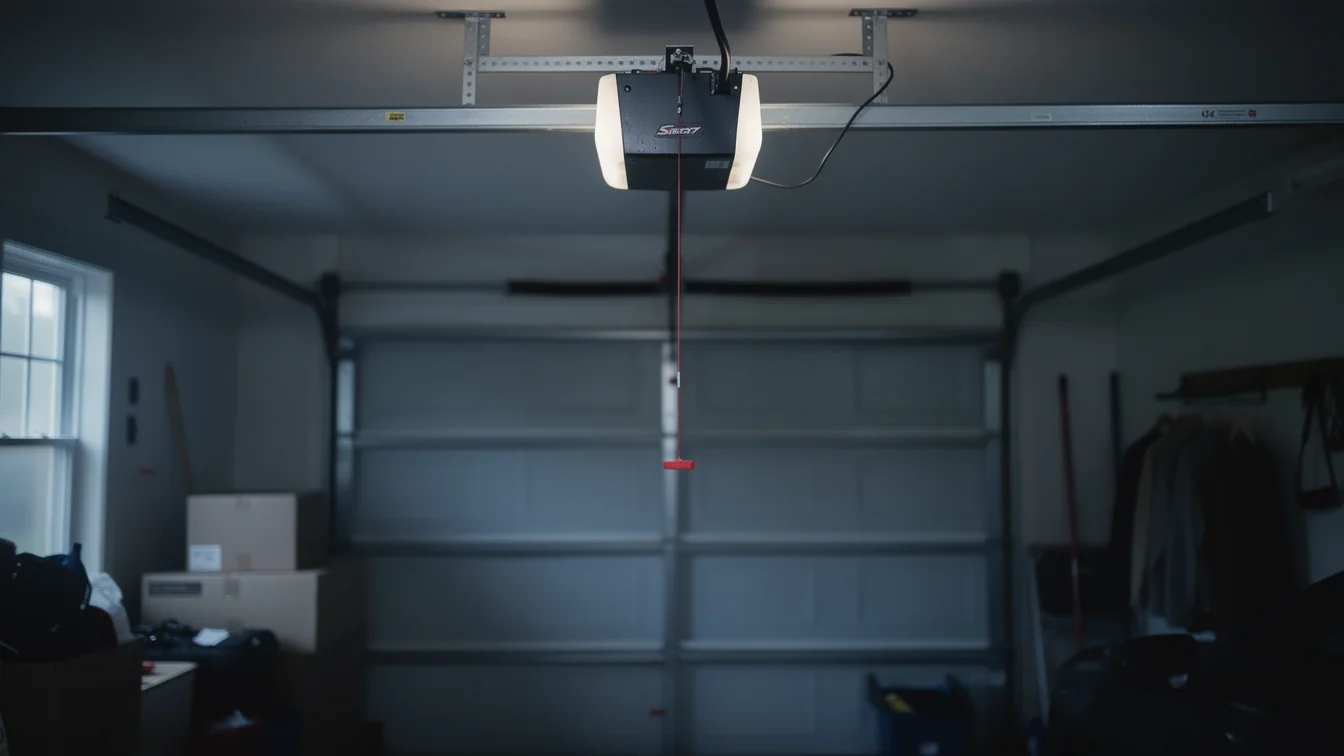
What we actually see: a chain or belt drive that's fine mechanically but has no way to move without grid power, a wall control that goes dark, and a homeowner standing in the driveway wondering if the whole unit died. Usually it didn't. The motor's asleep, not broken. There's a manual release cord for exactly this situation, and on houses this age it's often never been pulled once since move-in, which means it can be stiff or the pull handle's gone brittle from years of dust.
When It Stops Being a DIY Job
Pulling the manual release and lifting the door by hand to get the car out during an outage - that's fine, that's what it's for. Reprogramming a remote after a power blink, resetting a wall control, replacing a dead keypad battery - also fine, also not a call for us.
It stops being a DIY job the moment the power's back on and the opener still won't respond, or responds but the door doesn't move the same way it did before. On houses from this build era, that's frequently a logic board that took a surge during the outage, not the motor itself - boards from the 1990s and early 2000s don't have the surge tolerance newer units do. It's also not a DIY job if the door was heavy or dragging before the outage ever hit, because that's a spring or cable problem the power outage just exposed, and torsion springs under tension are not something to troubleshoot solo.
One honest limit here: if the circuit board is the failure and the unit is original to a house built in the mid-90s, we usually recommend replacing the opener rather than hunting for a board that matches a design discontinued two decades ago. Parts for that specific vintage are not something we can promise on short notice.
Leaving It Alone
A door that's been sitting disconnected since a power outage - manual release pulled, nobody's bothered to reset it - is a door that's also not locked the way the opener's lock-bar would normally hold it. For houses in this area built mostly in the 1980s and 90s, a lot of those side doors and release mechanisms are original hardware, and leaving the opener disengaged for weeks because reconnecting it seems like a hassle just means the garage is secured by whatever manual latch is on the door itself, if there is one.
The other thing that happens when people leave it alone: the next real outage. A board that half-failed the first time and got left alone usually finishes failing the second time, often at a worse moment. We'd rather get the call for a ten-minute reset or a board swap now than the call where the door's stuck shut with a car on the wrong side of it.
What the Weather Here Does to It
This area sits in a cold-moderate climate band, which doesn't mean brutal winters, but it means real freeze-thaw cycles every year, and that matters for openers more than people expect. Cold tightens up chain and belt tension, stiffens old grease in the drive rail, and on units installed when this area's housing was going up in the 90s, the safety-eye sensors mounted low near the floor weren't always sealed against moisture the way current ones are. Condensation on an old sensor lens reads as an obstruction, and the opener refuses to close - which looks like a power problem but isn't one.
Power outages here tend to cluster with the same weather that stiffens the hardware - a cold front with wind, not a sunny afternoon. So the two issues show up together more than people expect: the storm knocks the power, and the cold has already made the manual release harder to pull and the door heavier to lift by hand. If your opener's original to a house from this build era, that combination is worth planning around before the weather turns, not during it.
Frequently asked questions
My opener won't respond after the power came back on - is it dead?
Not necessarily. On openers original to houses built in the 1986-2012 window common here, a power outage can trip the logic board without killing the motor. Try unplugging the unit for sixty seconds and plugging it back in. If it still won't respond, the board likely took the hit and needs a look, especially on units from the earlier end of that range.
Should I get a battery backup unit for my opener?
If your opener predates battery backup as a standard feature - common on houses built here in the 80s and 90s - adding backup means the door still cycles during an outage instead of needing the manual release. It's a reasonable upgrade on an older system, though replacing the whole opener sometimes makes more sense than retrofitting backup onto an aging board.
Why does my door act up more in cold weather?
This area gets real freeze-thaw swings even though winters aren't extreme. Cold stiffens chain tension and old grease, and on older units the safety sensors can read condensation as an obstruction and refuse to close. It's often mistaken for an opener failure but it's usually a cold-weather symptom on hardware that's been in service a long time.
Related garage door services in Jefferson
More garage door guides
Book garage door service in Jefferson
Call now or request a quote - tell us what the door is doing and where you are.