
Jefferson, GA · Garage Door Service
Garage Door Care for Jefferson's 1990s-Era Housing Stock
Most Jefferson homes went up between 1986 and 2012. Here's what that building era and the area's cold-moderate winters actually do to a garage door over time.
- Repairs & new doors
- Springs & openers
- Serving 6 nearby communities
What Is Going On
If you own a house in this part of Jefferson, odds are good it was built somewhere between 1986 and 2012, with the median landing right around 1996. That's not a trivial detail. Doors and openers installed when a house was built have a shelf life, and a door original to a 1996 build is now closing in on 30 years of cycles - springs, rollers, cables, the whole assembly. Across the fifteen communities this area covers, from Pendergrass and Arcade in close to Commerce and Hoschton a bit further out, the housing is overwhelmingly 1980s and 90s stock, not newer builds. That means a lot of garages around here are running original torsion springs that were never rated for three decades of use, openers with chain drives that have outlived their gearing, and steel panels that have taken thirty winters of expansion and contraction. The symptom isn't always dramatic. Sometimes it's just a door that hesitates half a second longer than it used to, or a spring that looks fine but is one cold morning away from letting go. The age of the house tells you more about what's likely wrong than the sound the door is making.
When It Stops Being a DIY Job
A torsion spring under tension can put someone in the hospital, and on a door this age the spring has had thirty years to fatigue in ways you can't eyeball. If your house falls into that 1986-2012 window and the door has never had the spring replaced, don't put your hands on it. Swap a bottom roller, sure. Tighten a loose track bracket, fine. But a spring, a cable, or anything holding the door up under load on a house built in that era is a call, not a weekend project. I'll say plainly: if you're not sure how old your spring is, treat it like it's original to the house and call before you touch it. That's the honest line - I'd rather lose a small job to caution than have someone get hurt saving forty dollars.
Leaving It Alone
Here's the thing nobody wants to hear: sometimes the right move is to do nothing yet. A door that's slow, a little noisy, or cosmetically rough but still opening and closing square isn't an emergency. Given the median build year sits around 1996, a lot of these doors still have real life left in the panels even if the hardware is tired. Replacing hardware on a door that's structurally sound costs a fraction of a full replacement. The mistake I see is homeowners assuming age alone means replace-everything, when often it's one worn part on an otherwise good door. I won't talk you into a new door when a spring and a set of rollers will carry you another decade.
What the Weather Here Does to It
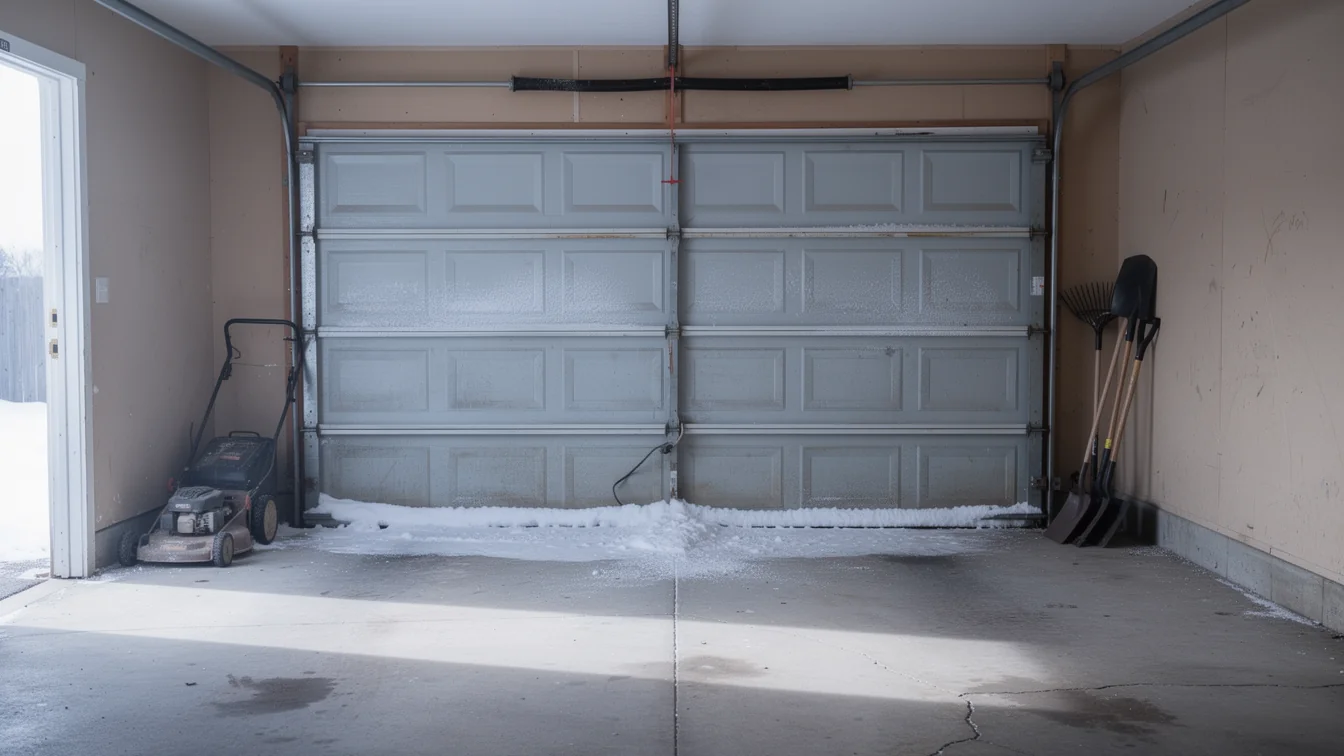
This area sits in a cold-moderate climate band - not the brutal cold of further north, but enough freeze-thaw cycling through the winter months to matter. On a door that's original to a 1986-2012 build, that cycling has been working on the steel, the weatherstripping, and the spring coating for the entire life of the house. Cold tightens steel and makes springs more likely to snap on the first truly cold morning of the season rather than during a mild stretch. It also shrinks rubber seals, which is why a lot of these older doors let in a draft or a thin line of daylight at the bottom that wasn't there when the house was new. None of this is dramatic weather - no named storms, nothing extreme - but thirty-some years of ordinary cold-moderate winters adds up on hardware that's never been swapped.
Frequently asked questions
My house was built in the mid-90s and the door has never been serviced. Is that a problem?
It can be. A spring original to a mid-90s build has been cycling for close to thirty years, which is well past what most torsion springs are rated for. It may still look fine and still be a hazard. I'd get it looked at before it fails on its own, usually on a cold morning.
Do I need a new door or just new parts?
Often just parts. If the panels aren't dented or rusted through and the door still tracks straight, a spring and roller replacement usually solves it for a lot less than a full door. I only recommend replacement when the panels themselves are the problem, not the hardware.
Does the cold around here actually break springs?
Cold steel is less forgiving than warm steel, so a spring that's already fatigued is more likely to let go on a cold morning than a mild one. It's not the cold causing the wear - thirty years of cycling does that - but cold is often when a tired spring finally gives out.
Can I replace a torsion spring myself?
I wouldn't recommend it, especially on an older door where you don't know the spring's history. These are under heavy tension and the tools to do it safely aren't things most homeowners have on hand. It's one of the few jobs here I'd always say call for.
Related garage door services in Jefferson
More garage door guides
Book garage door service in Jefferson
Call now or request a quote - tell us what the door is doing and where you are.